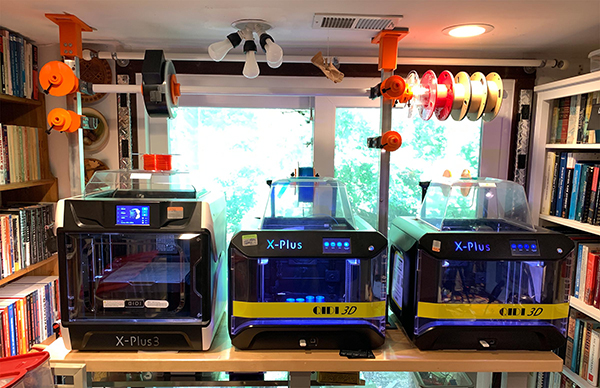
The most recent Maye Your Own Flow Cytometer is constructed mainly from 3D printed components. Optical mounts and rails, the optical bench, legs, PMT brackets and most recently the entire instrument breadboard is almost entirely 3D printed.
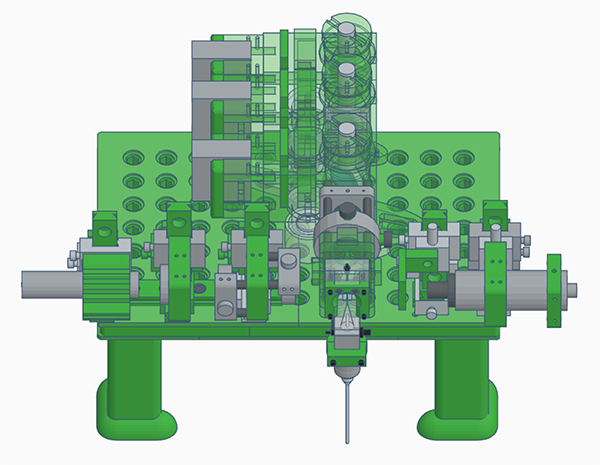
Currently almost 90% of the instrument is 3D printed, with parts indicated here in green. Aluminum or titanium is still required for some elements requiring absolute rigidity or the ability to move smoothly, such as the sliding dovetail rail mounts (aluminum) or the core rods of the dichroics (Teflon).
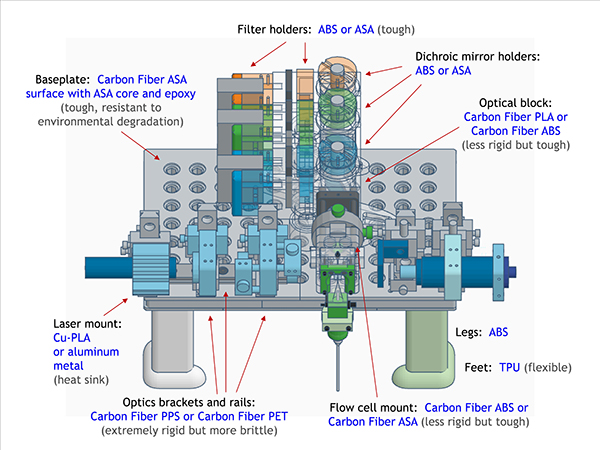
Different parts require different properties. Carbon fiber ASA with an interior ABS core was used for the breadboard to provide stiffness. The most demanding optical rely on CF-PET or CF-PPS, extremely stiff engineering filaments. ASA or ABS are used for structural compoents that benefit from strength but some resilience to shock, and TPU was used for the feet to absorb shock.